
Supplier market analysis should reveal how many qualified sources can actually meet a requirement, what constrains their capacity and where the buyer is exposed to dependency. A vendor directory is not sufficient.
Define the product or service precisely, examine verified supplier capability, compare price drivers and switching barriers, then connect the findings to a defensible sourcing or resilience decision.
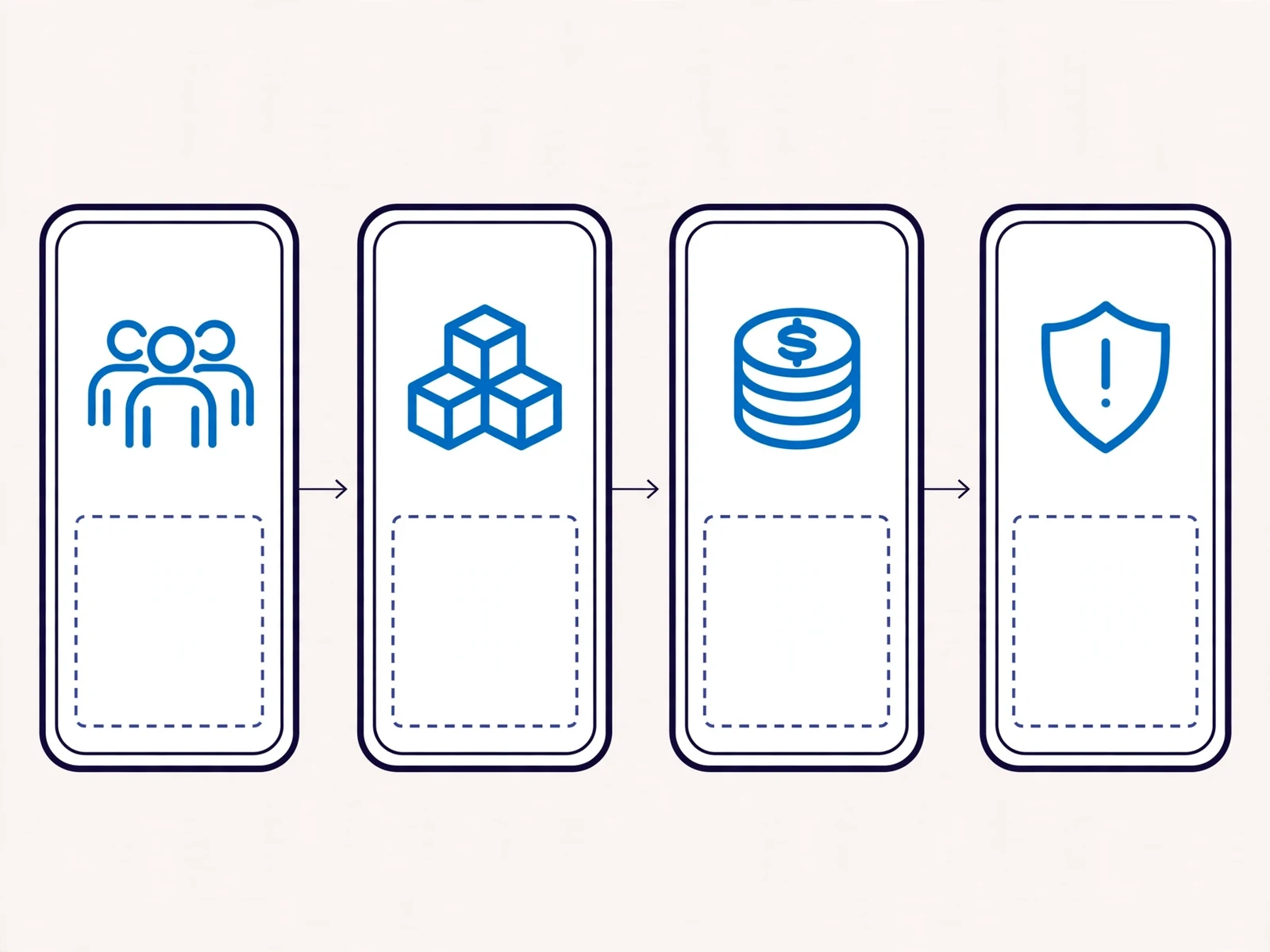
Business Demand
Document volumes, service conditions, technical standards and lead-time needs that define the relevant market. Separate negotiable preferences from essential constraints.
Supplier Market Structure
Map genuinely independent manufacturers, service providers, resellers and critical upstream sources. Check capacity claims, lead times, concentration and regional exposure using current evidence.
Sourcing Route
Choose between competition, staged qualification, supplier development, multiple sourcing or specification change according to demonstrated supply options and business continuity needs.
Evaluation Criteria
Set tests for technical fitness, delivery ability, total cost, compliance and credible contingency. A supplier’s catalogue listing should not qualify it automatically.
Negotiation Leverage
Understand bargaining power through supply-demand balance, switching costs, unique capabilities and alternative routes. Do not assume price concessions are possible without a viable fallback.
Award And Transition
Translate the analysis into qualification priorities, award conditions, capacity reviews and contingency planning. Monitor changes in supply rather than treating the market report as permanent.
Practical Supplier Market Analysis Framework Working Template
- 1. Which requirement defines the eligible supply market?
- 2. Who is truly qualified and independent?
- 3. What capacity or lead-time evidence exists?
- 4. Which shared sources create concentration risk?
- 5. How do costs and switching constraints affect bargaining power?
- 6. What sourcing decision follows from the findings?
- Next decision: Who owns the review and what evidence changes it?
Worked Example
Several resellers appear to offer a specialized component, but the buyer discovers they all rely on one production source. A dual-reseller award would not remove the underlying single-source risk. Procurement tests qualified alternate designs and realistic transition timing.
Common Mistakes to Avoid
- Counting reseller names as independent suppliers.
- Trusting unverified available capacity.
- Ignoring upstream shared dependencies.
- Comparing unit prices without switching and logistics costs.
- Failing to revisit analysis when suppliers or specifications change.
Questions Managers Should Ask
- How many qualified and genuinely independent sources exist?
- Which market claims have been validated?
- What are the real barriers to switching?
- Which specification change could widen credible supply?
Management Review Checklist
Present verified supplier options, capacity and concentration, cost drivers, evidence limits and their sourcing implications. Distinguish measured facts from market hypotheses.
Decision Quality Test
If the incumbent failed, could the buyer identify a tested source and feasible time to switch?
What to Review After Three Cycles
Compare actual cases over several cycles, test whether the original decision assumptions still hold, and improve the practice where evidence requires. Refresh market analysis when demand, capacity, suppliers or qualification rules change, using existing supplier management records.
Make the Method Part of Normal Work
Refresh market analysis when demand, capacity, suppliers or qualification rules change, using existing supplier management records.
A 30-Day Application Plan
- Week 1: Define market boundaries and buyer requirements.
- Week 2: Qualify alternatives and upstream dependencies.
- Week 3: Assess capacity, costs, switching and sourcing choices.
- Week 4: Recommend a route with risk owners and refresh triggers.
Capability Maturity
Basic: supplier options are listed. Developing: real capacity and dependency are assessed. Mature: market evidence drives resilient sourcing decisions.
For HR, L&D and Corporate Sponsors
Use a fictional category with apparent supplier diversity but common upstream exposure, requiring participants to evaluate credible alternatives.
Implementation Boundary
For supplier market analysis framework, standardize only the definitions, evidence, ownership and escalation rules where inconsistency creates real risk or confusion. Leave professional judgement open where circumstances differ materially. The objective is reliable decisions without forcing every case through an identical script.
Evidence to Bring to the Next Review
At the next supplier market analysis framework review, bring the actual work product, the evidence that changed the team’s view, the decision that followed and the assumption that still matters most. This makes follow-up useful for learning and accountability instead of repeating a status summary.
Related Courses in This Capability Cluster
Applied example for management teams
A manufacturer is considering a new specialist materials supplier. A market review finds several distributors but only two qualified producers, each with constrained capacity. The buyer checks how demand cycles, transport routes, technical approval and switching costs affect negotiating leverage. Rather than relying on the quoted price, the team compares total operating risk and qualification lead times. The sourcing strategy includes capacity reservations and periodic market checks, with clear triggers for developing an alternative.
Translate supplier analysis into training for different buyer roles
Commercial managers can use supply-market analysis to plan sourcing choices and negotiation strategy; public institutions also need appropriate tender controls and documentation. Compare the practical supply-market analysis guide with the GCC procurement programmes or Kenya procurement training. A cohort brief should distinguish strategy, evaluation, supplier performance and contract responsibilities rather than assume one module covers all.
For an organizational cohort, request a private instructor-led training proposal with the participant roles, approximate group size and capability objective. Dates, trainers and programme terms are confirmed during scoping.
Where to Go Next
The Strategic Sourcing and Supplier Market Analysis course develops this capability through live instructor-led practice and workplace application. For broader pathways, see Training Bundles and Corporate Academies.
Judge supplier competition by viable options and verified capacity, not the length of a shortlist.
Develop this capability in your organization