
Stakeholder engagement is most effective when it helps people understand and influence a real decision at the right moment. A contact list and an occasional update are not an engagement strategy.
Map the decision, the people affected, their legitimate interests, authority and information needs. Choose consultation and communication methods that match the choice and document commitments and unresolved disagreement.
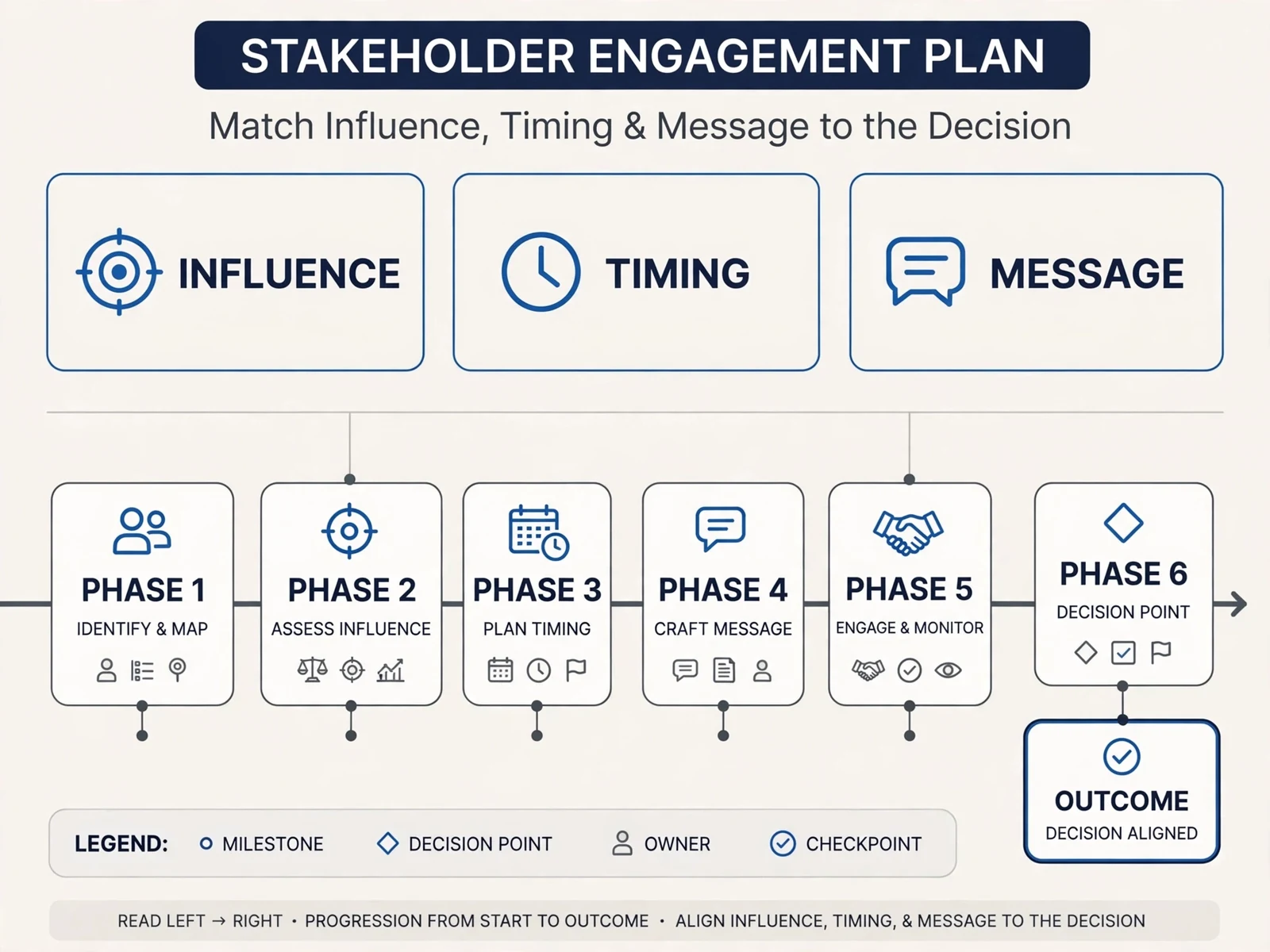
Decision Context
Clarify the decision the team needs to make, who can authorize it, its timetable and who will be affected. Do not promise stakeholders influence over a choice that has already been made.
Stakeholder Power
Identify formal authority, control functions, operational expertise and people exposed to consequences. Avoid simplistic power scores that ignore why a stakeholder’s input matters.
Underlying Interests
Ask what each group values, fears, knows and needs to see. Distinguish interests from stated positions and seek evidence of material concerns rather than treating resistance as ignorance.
Influence Strategy
Choose involvement appropriate to the decision: information, consultation, co-design or formal approval. Explain which feedback can alter the plan and when constraints prevent adoption.
Engagement Timing
Schedule engagement before irreversible choices and at meaningful milestones. Include shift teams, remote users and relevant external parties where appropriate, not only senior sponsors.
Commitment And Review
Record decisions, promises, objections, assigned follow-up and when feedback is due. Check whether stakeholders actually understood the outcome and whether commitments were delivered.
Practical Stakeholder Engagement Plan Working Template
- 1. What decision is open and when is it made?
- 2. Who has approval authority or a vital dependency?
- 3. What interests or consequences matter to each party?
- 4. Which input can influence the option selected?
- 5. When must consultation happen to be meaningful?
- 6. Who owns the response and commitment record?
- Next decision: Who owns the review and what evidence changes it?
Worked Example
A new operating policy affects front-line teams, compliance and customers. The project consults staff before designing the handoff, obtains specialist control review and tells participants which suggestions changed the proposal and which could not be accepted.
Common Mistakes to Avoid
- Equating high title with the most useful insight.
- Consulting after the decision cannot change.
- Treating disagreement as a communication defect.
- Using identical messages for people with different responsibilities.
- Failing to close the loop on promises and objections.
Questions Managers Should Ask
- Which stakeholder can materially change or block this decision?
- What legitimate interest explains their position?
- What feedback is still actionable at this stage?
- Who follows up on unresolved concerns?
Management Review Checklist
Review the decision, affected groups, critical interests, meaningful consultations, approvals and unfulfilled commitments. Adjust timing and methods where input is too late or absent.
Decision Quality Test
Can participants see which input affected the decision and why?
What to Review After Three Cycles
Compare actual cases over several cycles, test whether the original decision assumptions still hold, and improve the practice where evidence requires. Link engagement records to existing project governance, decision logs and business communication routines.
Make the Method Part of Normal Work
Link engagement records to existing project governance, decision logs and business communication routines.
A 30-Day Application Plan
- Week 1: Define decision boundaries and stakeholder roles.
- Week 2: Explore interests and knowledge gaps.
- Week 3: Engage before key commitments and document feedback.
- Week 4: Review decisions, promises and unresolved opposition.
Capability Maturity
Basic: stakeholders are identified. Developing: engagement changes decisions before commitment. Mature: trust and execution improve through accountable feedback loops.
For HR, L&D and Corporate Sponsors
Use a fictional change decision with conflicting stakeholder interests. Participants must distinguish consultation, approval and communication rather than creating generic message templates.
Implementation Boundary
For stakeholder engagement plan, standardize only the definitions, evidence, ownership and escalation rules where inconsistency creates real risk or confusion. Leave professional judgement open where circumstances differ materially. The objective is reliable decisions without forcing every case through an identical script.
Evidence to Bring to the Next Review
At the next stakeholder engagement plan review, bring the actual work product, the evidence that changed the team’s view, the decision that followed and the assumption that still matters most. This makes follow-up useful for learning and accountability instead of repeating a status summary.
Related Courses in This Capability Cluster
Applied example for management teams
A large project requires approval from finance, operations, legal and regional management. The project team initially sends the same status update to everyone and receives conflicting objections late in the process. The lead maps whose approval is mandatory, who can block implementation, which interests are at stake and when each conversation must happen. Stakeholders receive focused questions and decisions, not generic announcements. The engagement plan records commitments and emerging risks so unresolved disagreements are surfaced before the approval meeting.
Stakeholder engagement for project sponsors and PMO leads
A stakeholder plan is most useful when it is tied to actual project decisions and commitments rather than a static influence matrix. The stakeholder map template helps identify influence and accountability; the Nigeria project and programme management pathway puts sponsor responsibilities, escalation and communication into a wider capability programme. Before training a mixed group, distinguish stakeholder engagement duties held by delivery managers from those of executive sponsors.
For an organizational cohort, request a private instructor-led training proposal with participant roles, approximate group size and capability objectives. Programme availability and commercial terms are confirmed during scoping.
Where to Go Next
The Stakeholder Management and Strategic Engagement course develops this capability through live instructor-led practice and workplace application. For broader pathways, see Training Bundles and Corporate Academies.
Engage the right people early enough to improve a real decision, then follow through on commitments.
Develop this capability in your organization