
A requirements checklist is useful only when it distinguishes the business problem from somebody’s preferred feature list. Requests for a dashboard, a new form or an automation are proposed solutions, not yet testable requirements.
Before estimating or purchasing technology, confirm whose work is failing, what happens today, which constraints genuinely apply and how users will verify the desired behaviour. The goal is an agreed, traceable basis for choices, delivery and acceptance.
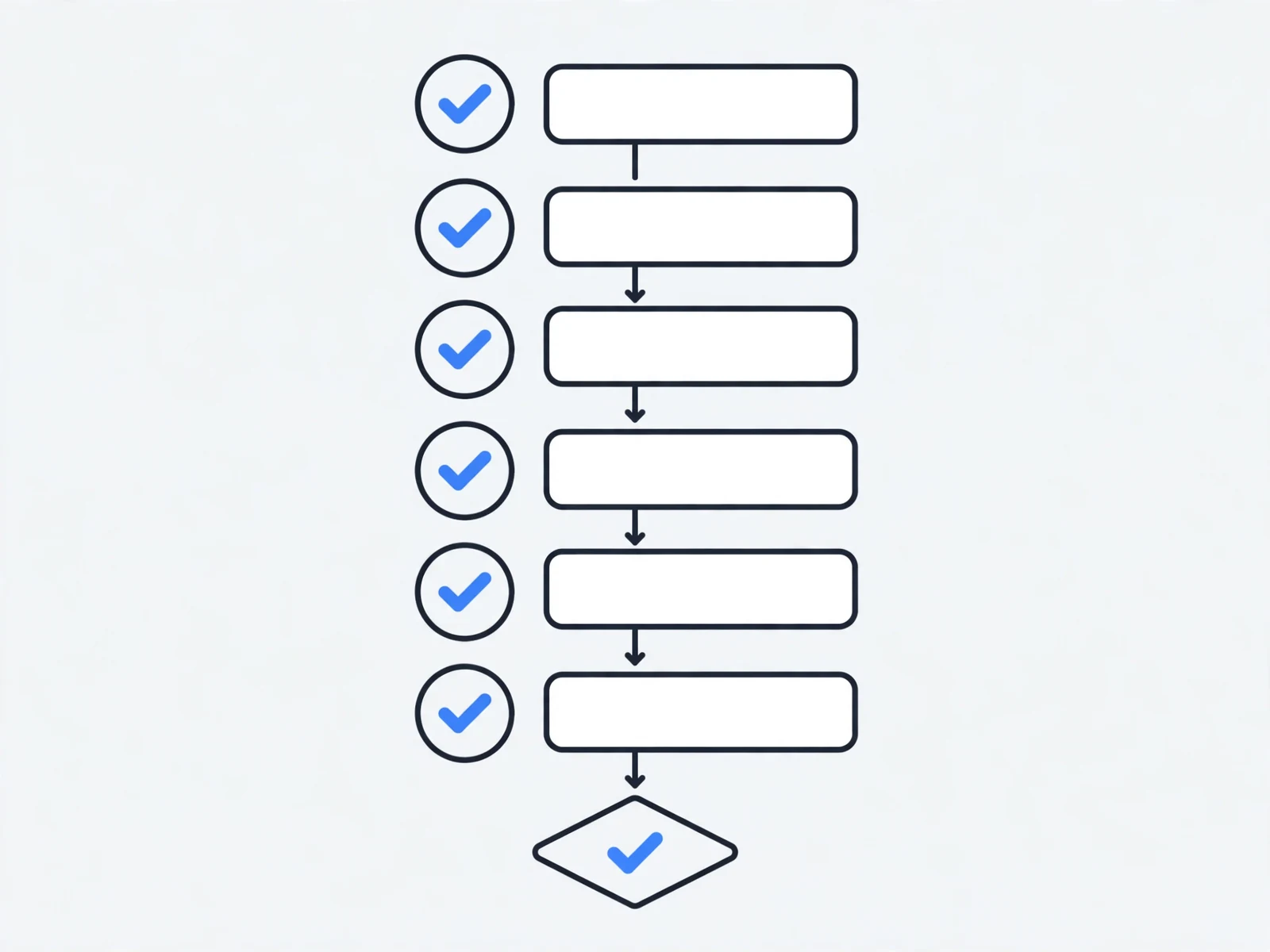
Business Need
State the problem in observable terms: the affected workflow, users, triggers, current exceptions and consequences. Ask what would count as improvement before discussing a particular interface or system. Record the decision sponsor and any regulatory or policy constraints requiring confirmation.
Stakeholders
Map the requester, end users, process owner, approver, operations support and affected downstream teams. Seek conflicting needs, especially exception cases that a single requestor may not see. Record who may decide priorities and who must sign off acceptance.
Current Process
Walk through a representative transaction from initiation to completion, including waiting, rework and failure handling. Capture current volumes or timings only when observed and sourced. Identify which steps are necessary controls versus habits introduced by previous tools.
Requirements
Write each requirement as an observable behaviour with context, trigger and expected outcome. Distinguish functional, data, access, integration and non-functional needs. Replace phrases such as ‘easy to use’ with a test scenario or agreed acceptance criterion.
Prioritization
Separate mandatory obligations from improvements and preferences. Compare business value, risk, dependency, effort and reversibility rather than treating the loudest stakeholder’s request as critical. Document trade-offs and approval when scope changes.
Acceptance And Traceability
Link every approved requirement to its original business need, responsible owner, test case and acceptance result. Include exception, permission and failure-path tests. When a requirement changes, update the corresponding tests and the decision record before declaring work complete.
Practical Business Requirements Checklist Working Template
- Problem: What observable failure or unmet need justifies change?
- Stakeholders: Who uses, approves, operates and is affected by the process?
- Current state: What sequence, exception and control exist today?
- Requirement: Given what trigger, who must be able to do what?
- Acceptance: How will a representative user prove that behaviour works, including failure paths?
- Priority and change: Who resolves competing requirements and authorizes scope changes?
- Owner and next review: Who will act, by when and with which evidence?
Worked Example
A department asks for an ‘instant approval dashboard.’ Interviews reveal that different teams mean tracking overdue approvals, authorizing exceptions and knowing who owns the next step. The analyst separates these needs into user actions and acceptance tests, then checks access controls, notification failures and handoffs. Some requested visuals may become optional once the underlying workflow is corrected.
Common Mistakes to Avoid
- Copying the requester’s feature list as if the problem were already diagnosed.
- Writing requirements using subjective words that cannot be tested.
- Leaving operations, security or downstream stakeholders out of discovery.
- Treating every requirement as equally urgent without stating trade-offs.
- Accepting a happy-path demonstration while exception handling remains untested.
Questions Managers Should Ask
- What evidence confirms this is a business problem rather than a design preference?
- Which user roles and exception paths have not been consulted?
- Could an analyst or tester independently determine whether the requirement passed?
- Which requirement is required for compliance, and who verified that requirement?
- Which change will alter cost, risk, dependencies or approval?
Management Review Checklist
Review a small traceability sample from business need to requirement, design, test and sign-off. Identify orphan requirements, ambiguous acceptance criteria and changes that have not been assessed for downstream effects. Escalate unresolved conflicts before they become rework.
What to Review After Three Cycles
After successive releases, compare the types of defects and change requests against the original requirements. If users repeatedly reinterpret a requirement, improve the discovery or example format; if tests repeatedly miss exceptions, strengthen acceptance coverage rather than adding more paperwork.
A 30-Day Application Plan
- Week 1: Select one live process and map its failure and stakeholder groups.
- Week 2: Draft testable requirements and verify them with users and operations.
- Week 3: Agree priorities and run representative acceptance scenarios, including exceptions.
- Week 4: Record sign-off, unresolved gaps and the reusable checklist changes supported by the trial.
Capability Maturity
Basic: requirements are documented with a clear business need. Developing: stakeholders validate priorities and measurable acceptance tests. Mature: change impact, test outcomes and business results trace back to approved decisions.
For HR, L&D and Corporate Sponsors
For a corporate cohort, bring one authentic request and its current handoffs, with sensitive details removed. A successful workshop produces a problem statement, stakeholder map, requirement examples, test cases and a prioritization decision suitable for review by the business sponsor.
Related Courses in This Capability Cluster
A worked application scenario
A business unit asks for a new approval dashboard, but employees describe conflicting reasons for the request. The analyst interviews decision owners, maps the current handoffs and separates mandatory controls from convenience preferences. Requirements are written as testable behaviors, including how an exception should be handled and how the user knows an approval succeeded. A cross-functional review ranks them by business value and risk. Before deployment, users test representative scenarios, and each acceptance result is traced to the original business problem.
Where to Go Next
The Business Analysis and Requirements Management course develops this capability through live instructor-led practice, scenarios and workplace application. Organizations building a wider pathway can also review TheSkillGrid Training Bundles and Corporate Academies.
Treat requirements as agreements that can be tested and traced, not as a growing inventory of requested screens or features.
Develop this capability in your organization