
A digital transformation roadmap should describe how the organization will change the way work happens, not only which technology will be implemented. Technology is one part of the transformation; operating model, skills, governance, data and adoption determine whether value appears.
Start With the Business Problem
Do not begin with a platform. Define the business problem, customer need, operating constraint or strategic opportunity. Technology choices should follow the value case rather than define it.
Map the Current Operating Model
Understand the current process, roles, decisions, data, systems, controls and pain points. A transformation can digitize a poor process and make the problem faster rather than better.
Define the Future Outcome
State what should be different for customers, employees, cost, speed, quality, risk or growth. Use outcomes that can guide design decisions rather than generic ambitions such as become more digital.
Identify Capability Changes
Transformation may require new skills, roles, management routines, data capability, product ownership or vendor-management capability. Make those needs visible early rather than treating training as a late implementation task.
Design the Technology and Data Layer
Decide which capabilities need technology support, what data is required, where integration matters and which architecture constraints must be respected. Avoid solving every requirement through customization.
Redesign Process and Decision Rights
Technology often changes who has information and who can act. Review approvals, handoffs, exception management and decision authority. Keeping the old process around a new system limits the value of transformation.
Plan Adoption by Role
Different groups experience different changes. Map what each role must stop, start or do differently. Tailor communication, training, support and manager reinforcement accordingly.
Use Pilots to Learn
A pilot should test assumptions, workflow, value and adoption, not simply prove the technology runs. Define what you need to learn before scaling and what evidence would cause the design to change.
Build Governance for Decisions
Define who owns scope, value, architecture, data, risk, change and benefits. Transformation governance should resolve trade-offs quickly enough to keep the program moving.
Track Benefits, Not Only Milestones
A system go-live is an output. Benefits may depend on adoption, process change, data quality or customer behavior after launch. Assign benefit owners and measures that continue beyond implementation.
Prepare for Operational Handover
Clarify who supports the new process, monitors performance, manages vendors, owns product improvement and handles incidents. A transformation is not complete when the project team leaves.
Review the Roadmap as Learning Changes
Transformation creates new information. Revisit priorities, sequence and assumptions as pilots, user feedback and business conditions change. A roadmap should guide adaptation, not prevent it.
Practical Working Template
- Business problem
- Current-state constraint
- Future outcome
- Process change
- Role/capability change
- Technology/data need
- Pilot
- Governance owner
- Adoption action
- Benefit measure
- Operational owner
- Review trigger
Worked Example
A company wants to automate a customer onboarding process. The initial plan focuses on buying workflow software. Mapping shows the larger delays come from duplicate approvals, unclear ownership and missing customer data. The roadmap is redesigned to simplify approval rules, clarify data requirements and role ownership, then configure technology around the improved process.
Common Mistakes to Avoid
- Starting with a technology purchase
- Digitizing a broken process
- Treating training as the entire adoption plan
- Measuring only project milestones
- Leaving benefit ownership with the project team
- Keeping old approvals around new technology
Questions Managers Should Ask
- What business outcome should change?
- Which process or decision must be redesigned?
- What capability must managers and employees build?
- What will the pilot teach us?
- Who owns the benefit after go-live?
Build a Dependency Map
Transformation initiatives often depend on data, policy, vendors, infrastructure, process owners and other projects. Map the dependencies that could delay value even if the core technology is delivered on time. Assign owners for the most critical interfaces.
Sequence for Learning and Value
Do not assume the biggest technical component should go first. Sequence work to test risky assumptions early, deliver useful value where possible and avoid locking the organization into a poor design. Smaller early releases can reveal adoption and process issues before large-scale investment.
Manage Legacy Constraints Explicitly
Old systems, contracts and processes may limit what can change immediately. Record which constraints are temporary, which require investment and which should influence the target design. Hiding legacy constraints usually creates surprise later.
Create a Benefits Review After Go-Live
Schedule benefit reviews after users have had time to adopt the new process. Compare actual behavior and outcomes with the original assumptions. Use the review to decide whether further process, data, training or technology changes are needed.
30-Day Application Plan
- Week 1: define the current decision, process or population and capture the baseline.
- Week 2: apply the framework to one live case and identify the biggest uncertainty or gap.
- Week 3: review the evidence with the relevant manager, partner or functional owner.
- Week 4: decide which part of the approach should become a repeatable management routine.
Final Review Checklist
- Is the management question clear?
- Are definitions and assumptions explicit?
- Is ownership visible?
- Is there a trigger for action or escalation?
- Will the next review show what changed?
Worked Example: A Successful Go-Live With Weak Business Value
A new platform launches on time and within budget, but teams continue using spreadsheets because the new workflow requires more approvals and does not fit the real work. Technically the project succeeded, but adoption and benefits are weak. A stronger roadmap would have redesigned the process and approval rules before configuration, tested the workflow with users and defined operational ownership after launch.
Use a Transformation Decision Log
Record major scope, architecture, process and policy decisions with rationale and assumptions. Transformation programs change over time, and teams can easily reopen old debates when the reason for a choice is forgotten. A decision log improves continuity and makes it easier to revisit a choice when the underlying assumption changes.
Connect the Roadmap to Portfolio Capacity
Digital initiatives compete for the same business experts, data teams, technology resources and change capacity. Review the roadmap alongside other major initiatives so the organization does not approve more transformation work than it can realistically absorb.
Final Management Checklist
- Is the business outcome and baseline defined independently of technology delivery?
- Who owns each operating-process and decision-rights change?
- How will adoption be evaluated through actual task performance, not login counts?
- Are data quality, privacy and control dependencies explicitly assigned?
- What evidence determines whether to scale, adapt or stop at the next stage gate?
Before adding another project milestone, confirm that the roadmap still describes the operational change it was meant to achieve.
Transformation leaders should also define which decisions can be made within the program and which require wider business approval. Clear decision rights reduce delays and prevent technology teams, process owners and sponsors from assuming someone else owns the trade-off.
That clarity becomes especially important when several functions share ownership of the same transformation outcome.
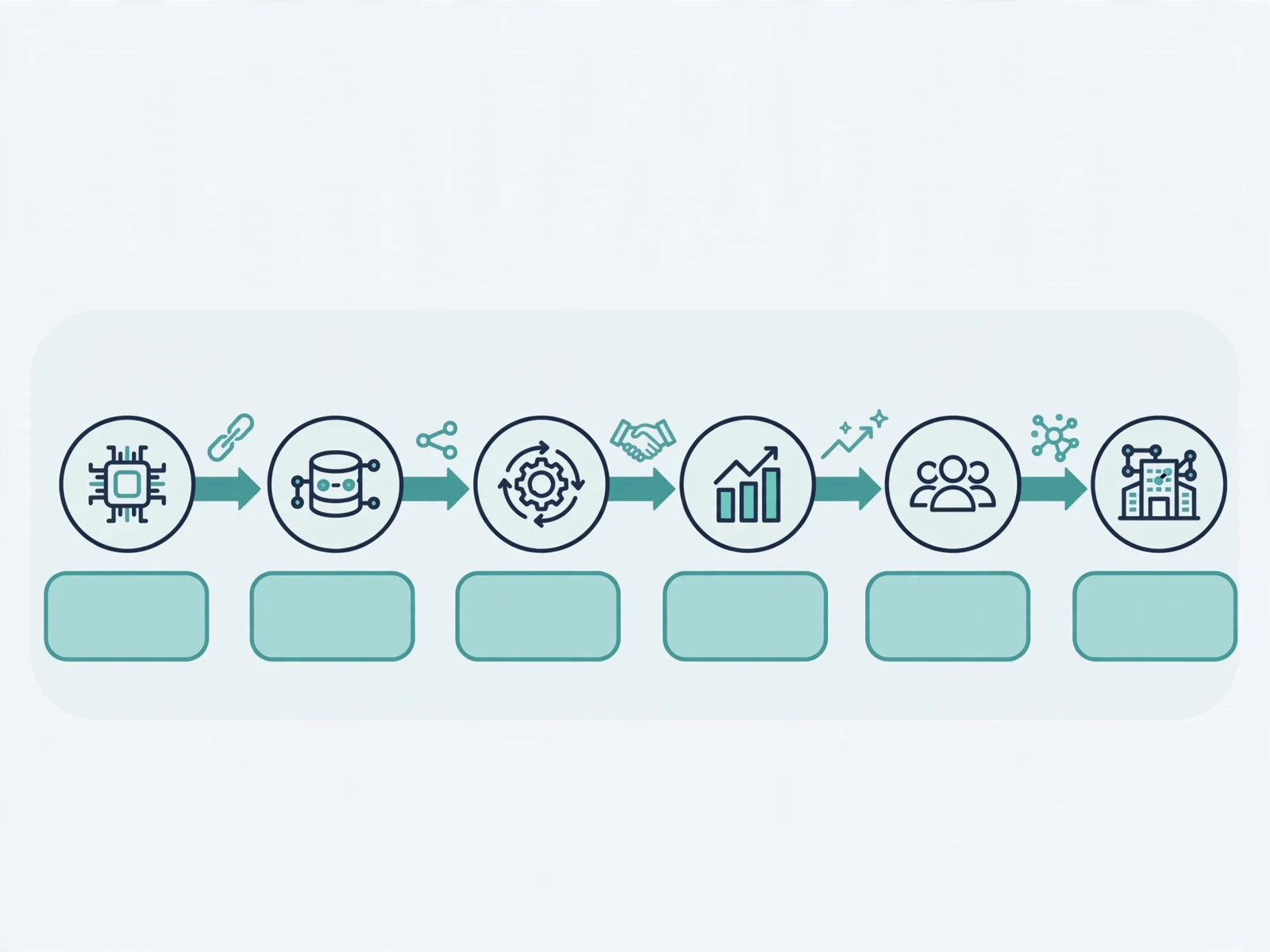
Observe user problem and baseline
Map processes, rights and data
Test real tasks and failure cases
Approve benefit and operational readiness
Each transition requires evidence and an accountable sponsor—not simply completion of the previous software milestone.
Start with one operational outcome and trace the work backward
A digital transformation roadmap must explain which business outcome should improve and why the existing way of working cannot deliver it reliably. A new application, AI assistant or dashboard is a possible intervention—not a result. Choose a service or workflow, identify the customer or colleague it serves and observe a sample of actual cases. Determine where work waits, re-enters another department or requires undocumented decisions. The diagnosis should include current quality, cost, turnaround and user experience, with notes on missing evidence.
Do not assume that all delay is caused by old software. A request may be delayed because authority is unclear, information arrives incomplete or teams disagree about service priorities. If those issues remain unresolved, an expensive system can reproduce them faster. Record which problem technology can address, which requires process or governance redesign and which may not need a new tool at all.
Map capabilities and dependencies instead of making a feature wishlist
A credible roadmap identifies the capabilities required to change the end-to-end workflow: information quality, access rights, process rules, people skills, integration, service ownership and support. Map what must happen before another change can operate. For example, a customer portal cannot safely provide automated case updates if different teams record case status using incompatible categories. The data standard and ownership decisions belong on the roadmap before a public launch.
Group work into bounded releases with a meaningful objective and a demonstrable result. Differentiate prerequisites, changes that can be piloted and optional enhancements. Avoid claiming a precise investment return when benefits depend on adoption that has not been tested. Identify which decisions are irreversible and which improvements can be explored without disrupting the full organization.
Worked example: a customer portal that did not reduce service calls
A regional service provider introduced a self-service portal. Login and download counts increased, but customer support calls did not decline. Management initially proposed adding an AI chatbot. A review of user cases showed that customers could initiate a request online but could not complete it when a missing document or an exception was involved. The portal measured use, not successful resolution. Staff had no clear owner for cases moving between digital and assisted channels.
The transformation sponsor changes direction. Teams define the end-to-end completion outcome, introduce clearer exception routing and test a small group of requests. Technology supports real-time status only after operating teams agree consistent case definitions. The next phase is approved based on completed transactions, repeat contacts, accessibility and staff workload rather than number of chatbot conversations. The project demonstrates why adoption metrics must be interpreted against customer value.
Make each stage gate a real management decision
A roadmap should show what evidence will justify moving from discovery to pilot, from pilot to expansion and from expansion to normal operations. The sponsor should ask whether affected employees can perform the new workflow, whether security and privacy requirements have been reviewed, whether exception handling works and whether service quality is improving. A feature being technically complete is not the same as being safe or beneficial to launch.
Record the accountable owner for business outcomes separately from the technical delivery lead. Assign data governance, process standards, training, customer communication, incident response and ongoing maintenance. A program can go live on time and still fail if nobody owns those duties after the project team leaves.
| Dependency | Evidence needed | Decision owner |
|---|---|---|
| Common case statuses | Agree definitions and exceptions | Operations process owner |
| Customer data access | Approved controls and permissions | Authorized security/data owner |
| Expansion beyond pilot | Completion, quality, workload and risk | Business sponsor |
Revisit the benefit case after release
Compare observed results against the same definitions used in the baseline. Track actual completion, correction effort, user experience and operating cost. Note whether difficult cases were diverted rather than solved. If benefits are weak, investigate whether the issue lies in interface design, access, process handoffs or unsupported assumptions. Do not increase automation merely to make the original strategy appear successful.
At the end of each stage, update the roadmap based on evidence. A change to customer demand, an incident or a new regulatory obligation may make the original order of work inappropriate. A strong transformation program preserves strategic direction while allowing responsible teams to revise sequencing and investment conditions.
Where to Go Next
The Digital Transformation Leadership develops this capability through live instructor-led practice and workplace application. Related programs include AI for Business Leaders and Change Management and Organizational Transformation.
Use the framework on one real decision first, then build the repeatable practice from what you learn.
Technology-to-Operations Transformation for Teams
A practical cohort can help transformation managers align programme roadmaps with operating ownership, capabilities and change responsibilities.
Make the roadmap accountable: See the digital transformation governance framework for decision rights and approvals, and the adoption metrics guide for evidence that new practices are being used.
Develop this capability in your organization