
Strategic workforce planning is not a headcount forecast. It is a structured way to understand what work the organization will need, what workforce it is likely to have, where material gaps may emerge and what actions should begin before those gaps become urgent.
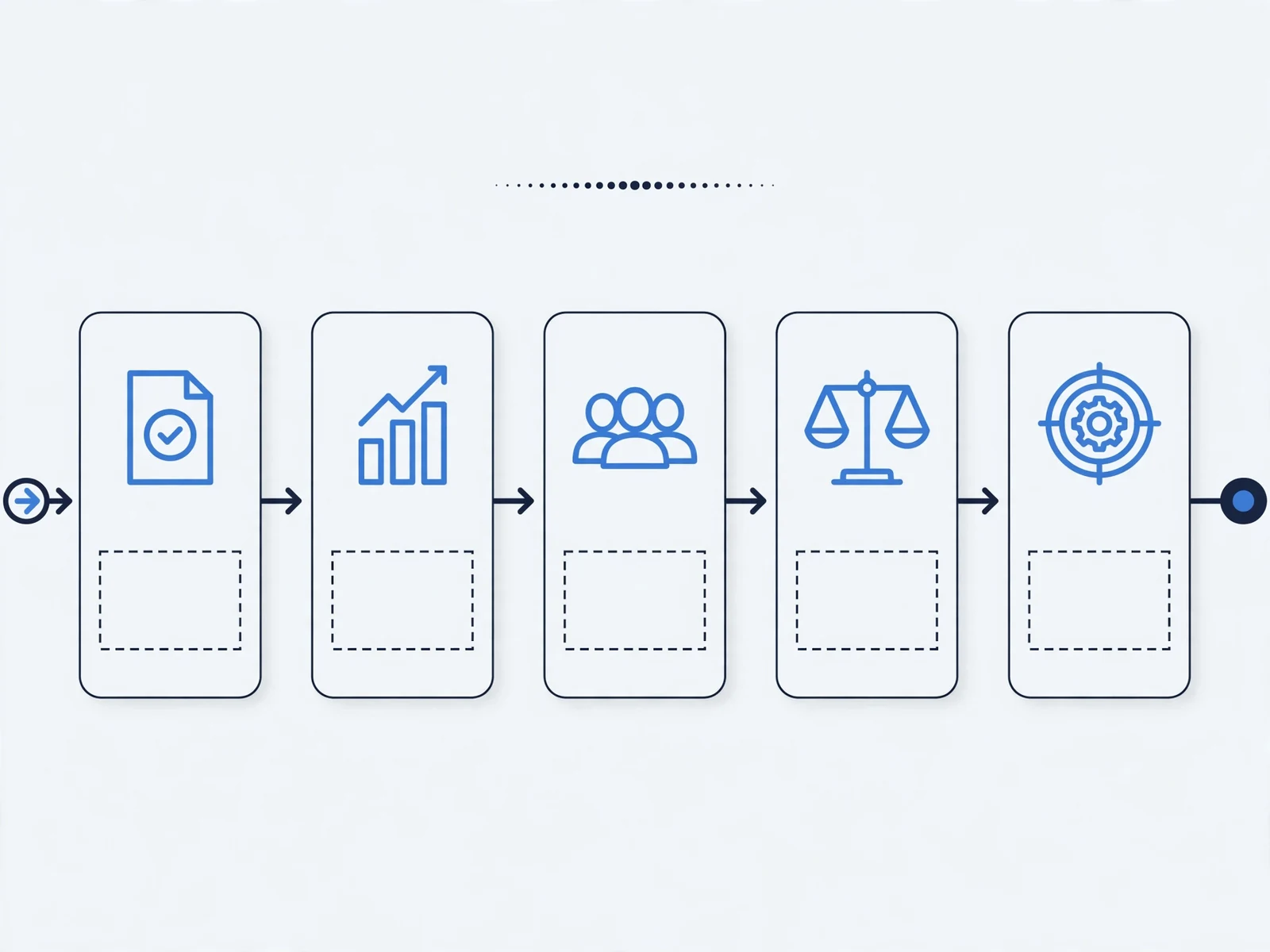
Start With Business Direction
Workforce planning should begin with strategy, operating plans and plausible business scenarios. Growth, automation, new markets, restructuring, regulation or product change can alter the work the organization needs. Do not start by extending last year’s headcount line. Start by asking what the business will need people to do differently.
Translate Strategy Into Workforce Demand
Demand is not only the number of people required. It includes roles, capabilities, locations, timing, leadership depth and the type of employment or sourcing model that fits the work. A business may need fewer people in one process but more analytical, digital or commercial capability elsewhere.
Build a Current Workforce Supply View
Understand the workforce the organization has now. Useful information may include role population, capability, location, age where legally and appropriately used, tenure, performance, mobility, turnover, retirement exposure, succession depth and critical specialist concentration. The purpose is to understand supply, not simply describe demographics.
Project Internal Supply
Current supply will change even without deliberate intervention. People leave, retire, move internally, develop, take promotions or become unavailable. Workforce planning should consider those flows so leaders do not assume today’s workforce remains unchanged over the planning horizon.
Identify Gaps by Capability and Role
Compare future demand with projected supply. Some gaps are quantitative, such as insufficient capacity. Others are qualitative, such as missing skills, weak leadership depth or capability concentrated in too few people. Treating every gap as recruitment can be expensive and slow.
Prioritize Critical Gaps
Not every workforce gap deserves equal attention. Prioritize roles and capabilities where shortage would materially affect strategy, customers, risk, regulation or execution. A small specialist population can be more critical than a much larger general workforce.
Build Multiple Action Options
Responses may include hiring, internal mobility, development, reskilling, automation, outsourcing, role redesign, retention, succession, flexible staffing or work redesign. Good workforce planning gives leaders choices rather than presenting one fixed staffing number.
Use Scenarios
The future is uncertain, so build a small number of plausible scenarios. Ask what workforce would be needed if growth is faster, automation is delayed, a new market opens or demand weakens. Scenarios help identify actions that are robust across several futures.
Connect Workforce Planning to Finance
Workforce choices affect cost, productivity, investment and timing. Finance should understand the assumptions behind workforce demand, while HR should understand the financial consequence of options. The strongest plans make trade-offs visible rather than treating workforce and budget planning as separate exercises.
Connect to Talent and Succession
Workforce planning should identify where internal pipelines can solve future need. Succession, high-potential development, career pathways and mobility can reduce external dependency. This is particularly important for roles where external supply is scarce or organizational knowledge matters.
Create Leading Indicators
Track signals that show assumptions are changing. Examples include turnover in critical roles, time to hire, internal fill rate, skill acquisition, workload, retirement exposure, vacancy duration or business-volume changes. Indicators should lead to action, not only reporting.
Review the Plan as Strategy Changes
Strategic workforce planning is not an annual file. Review material assumptions when business strategy, technology, demand or labor-market conditions change. The plan should remain connected to live management decisions.
Practical Working Template
- Business scenario
- Future work requirement
- Role/capability demand
- Current workforce supply
- Projected internal supply
- Gap
- Criticality
- Action options
- Cost/timing considerations
- Owner
- Leading indicator
- Review date
Worked Example
A company plans to expand a digital service. The first instinct is to hire more employees. Workforce analysis shows the larger constraint is not total headcount but a shortage of product-management and data capability, while another operational role is likely to reduce through automation. The plan becomes a mix of internal reskilling, selective hiring and role redesign rather than a broad headcount increase.
Common Mistakes to Avoid
- Extending last year’s headcount without testing business assumptions
- Treating all gaps as recruitment needs
- Planning only at job-title level without capability depth
- Ignoring internal mobility and succession
- Separating workforce planning from finance
- Creating one forecast instead of testing scenarios
Questions Managers Should Ask
- What future work changes the workforce requirement?
- Which capability gap would most constrain strategy?
- What supply will we already have internally?
- Which action should begin now because lead time is long?
- What indicator would tell us the plan needs revision?
Build a Capability Heatmap
Map future capabilities against current strength and business criticality. A capability that is moderately weak but strategically essential may deserve action before a much larger but easier-to-hire role gap. Heatmaps help leaders see where development, succession or selective external hiring should be prioritized.
Separate Structural and Temporary Demand
Some workforce demand is permanent, while other demand comes from a project, transformation or temporary peak. The resourcing response should reflect that difference. Permanent roles, fixed-term resources, contractors, outsourcing or internal project assignments can all be appropriate depending on the nature of the work.
Use Time-to-Capability, Not Only Time-to-Hire
A vacancy can be filled quickly while the person still needs months to become effective. Estimate how long it takes to recruit, onboard and build the required judgement for critical roles. This may change when the organization needs to begin succession or development actions.
Create Workforce Actions With Owners
Each material gap should end with an action owner, timing, cost implication and review trigger. Avoid plans that identify future shortages but do not start any response. Strategic workforce planning creates value when action begins early enough to change the outcome.
30-Day Application Plan
- Week 1: define the current decision, process or population and capture the baseline.
- Week 2: apply the framework to one live case and identify the biggest uncertainty or gap.
- Week 3: review the evidence with the relevant manager, partner or functional owner.
- Week 4: decide which part of the approach should become a repeatable management routine.
Final Review Checklist
- Is the management question clear?
- Are definitions and assumptions explicit?
- Is ownership visible?
- Is there a trigger for action or escalation?
- Will the next review show what changed?
Worked Example: Growth Without the Right Capability Mix
A company plans to add two regional teams and initially assumes it needs twenty more people. Workforce analysis shows the larger constraint is not total headcount but a shortage of experienced managers and two specialist capabilities that take much longer to develop. The action plan changes to early manager succession, selective specialist hiring and later-volume recruitment for general roles. The workforce plan becomes more precise because it distinguishes capacity from capability.
Build a Workforce Risk Register
For critical gaps, record the business consequence, time to capability, current mitigation and leading indicators. A role with a long hiring cycle, weak internal pipeline and high operational consequence should be treated differently from a role that can be filled quickly from several sources. This helps leaders prioritize attention before vacancies become urgent.
Final Management Checklist
- Have future work outputs been translated into demand for roles and capabilities?
- Is current supply verified for skills, readiness, retention risks and realistic movement?
- Which critical gaps matter under each plausible demand scenario?
- What mix of hiring, upskilling, redeployment or redesign has an accountable owner?
- Which demand signals or assumptions should trigger a workforce-plan refresh?
Treat the workforce plan as a choice among actions under uncertainty, not a single headcount prediction.
Translate the strategy into the work people will perform
Strategic workforce planning is not a headcount extrapolation. Start with the outputs the business expects to deliver and the capabilities necessary to produce them. A growing customer base might require more service representatives, a better knowledge system or redesigned work—not necessarily the same percentage increase in every role. Identify demand drivers such as volumes, service complexity, regulation, technology, geography and the time needed to build specialist expertise.
Discuss at least two plausible operating scenarios. One might assume steady demand with existing processes; another may include a new customer segment or a technology investment that changes task composition. The point is to reveal decisions and dependencies, not present a precise-looking future workforce number without evidence. Record the assumptions that affect role demand and review them as the business learns more.
Worked example: expanding a professional-services delivery team
A training and advisory company expects greater demand from enterprise customers. Managers propose hiring more facilitators based on the increase in sales enquiries. Operations discovers that the constraint is partly in experienced program designers and coordinators who translate customer needs into viable learning programs. Recruiting only more instructors would not solve design bottlenecks or handoff delays.
The team maps projected program volume by type, design effort, facilitation capacity and supporting operations. It considers different responses: develop current coordinators, recruit specialist designers, use qualified external capability for peaks or redesign repetitive administrative work. Finance reviews the lead time and ongoing commitment of each option. The resulting workforce plan is a sequence of decisions tied to real capabilities, not just a target number of employees.
What work may the business need to deliver?
Who can do it, with which tools and capacity?
Which skills or handoffs actually constrain results?
Build, recruit, redeploy or redesign with owners.
Assess supply by skills and readiness, not just people on payroll
A role count does not show whether people can perform the required work safely or independently. Map critical capabilities and evidence of actual performance. Include expected departures, internal mobility, development lead time and the reliance on a few specialists. Distinguish short-term cover from sustainable readiness. A person who can perform one part of a job under supervision may not yet be available for the full role.
Review which skills can be developed internally and which need external recruitment or partnerships. Consider the time managers must invest in coaching new employees; assuming a new hire adds full productive capacity on day one can undermine the plan. Use real workload and service evidence when discussing capacity, and avoid simplistic assumptions about demographic groups or individual employee behavior.
Create an action matrix that managers can fund and review
| Constraint | Potential response | Evidence required |
|---|---|---|
| Specialist capability shortage | Develop talent or hire selectively | Skills, readiness and lead time |
| Temporary demand peak | Flexible capacity or sequencing | Duration, quality and availability |
| Repeated administrative rework | Simplify workflow or improve systems | Observed process and results |
Review the plan as evidence changes
Set review dates around material strategic and operating changes, not only an annual calendar. Compare actual demand with the assumptions, capability readiness and effects of interventions. A hiring freeze, new regulation, major customer, or technology implementation may change the best response. Managers should record what they learned, which scenario remains credible and who can authorize a revised plan.
A strong workforce plan gives leaders options before gaps become crises. It creates a link between what the organization intends to deliver, what its people can actually do and the investment needed to develop reliable capability.
Putting workforce planning into practice: The GCC HR training pathway connects this forecasting framework with the HRBP, talent and workforce-analysis capability of different participant groups.
Where to Go Next
The Strategic Workforce Planning develops this capability through live instructor-led practice and workplace application. Related programs include Talent Management and Succession Planning and People Analytics for HR and Business Decisions.
Use the framework on one real decision first, then build the repeatable practice from what you learn.
Strategic Workforce Planning for Teams
HR, finance and operational planning leaders can connect workforce demand, supply, capability gaps and intervention choices in a structured private cohort.
Apply the workforce planning steps: See the demand forecasting guide for turning strategy into future role requirements, and the people analytics guide for interpreting workforce measures without overclaiming.
Develop this capability in your organization