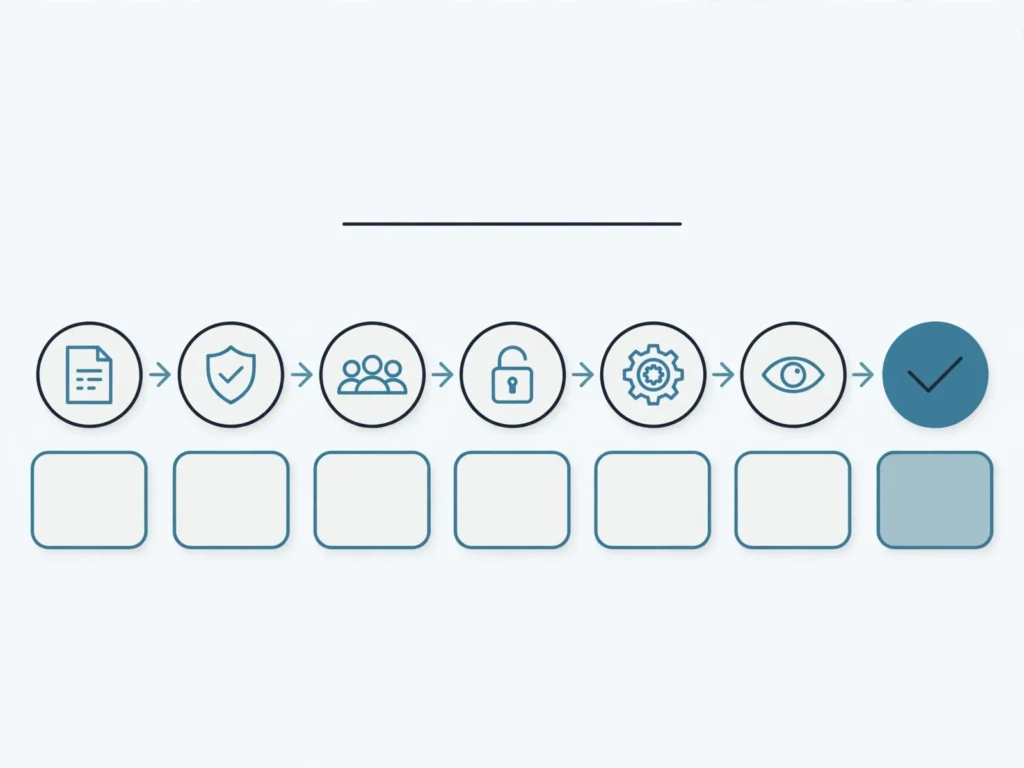
AI governance should answer a simple leadership question: who is allowed to use which AI, for what purpose, with what data, under whose accountability?
Governance that cannot answer those questions will struggle to guide real work.
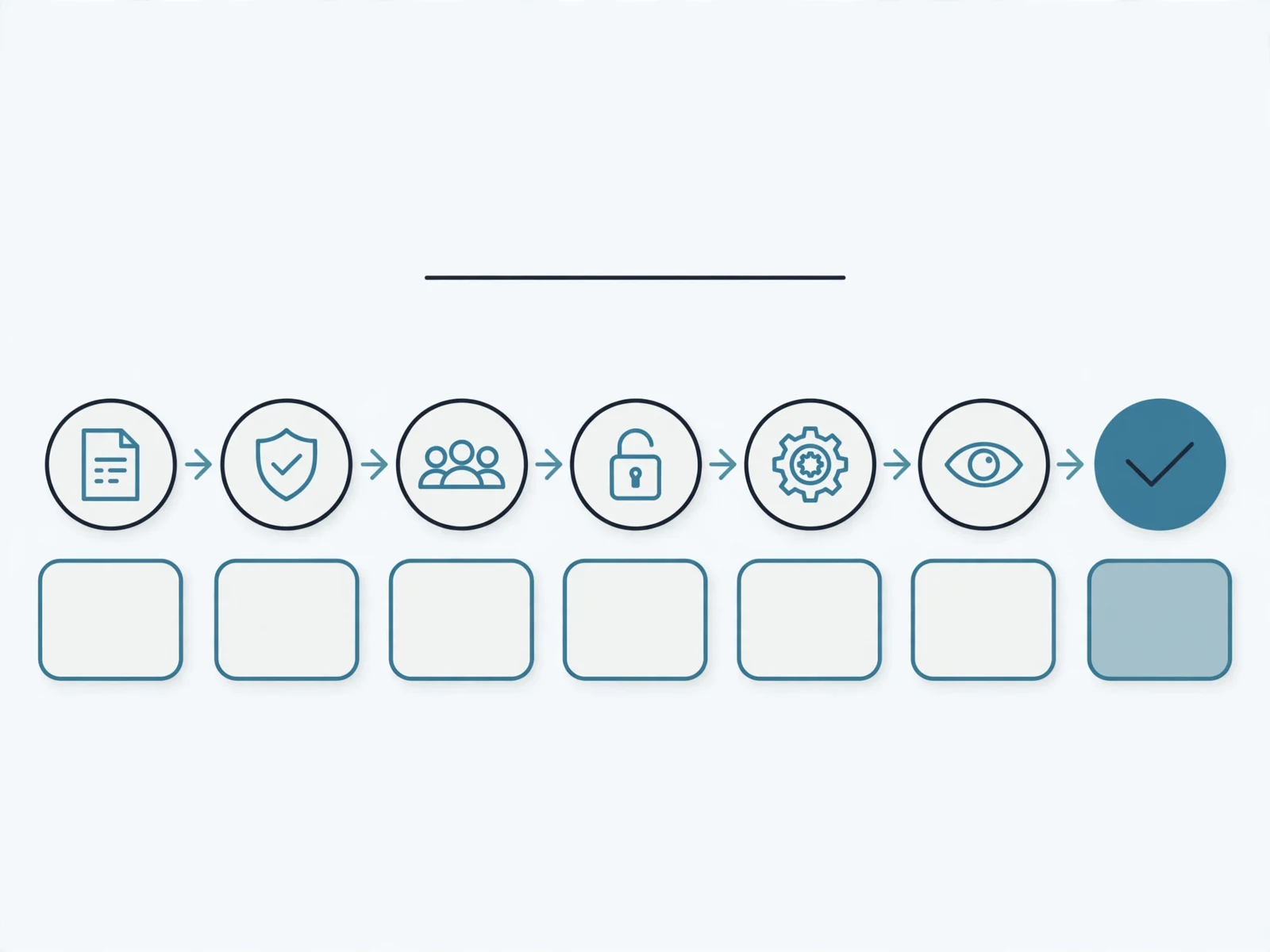
1. Define Accountable Ownership
Clarify who owns:
- AI strategy;
- risk policy;
- approved tools;
- data rules;
- business use cases;
- vendor decisions;
- incident response.
2. Classify Use Cases
Not every AI use carries the same risk.
Separate low-risk productivity support from high-impact decisions involving customers, employees, finance, safety, legal rights, or sensitive data.
3. Define Data Boundaries
Employees need clear rules on what data may be entered into which tools.
Consider:
- personal data;
- customer data;
- commercially sensitive information;
- intellectual property;
- regulated data;
- confidential documents.
4. Set Human-Oversight Rules
Define where a human must review, approve, or make the final decision.
AI can support judgement without owning accountability.
5. Require Use-Case Owners
Every material AI use case should have a business owner responsible for the outcome and controls.
6. Evaluate Vendors
Assess:
- security;
- data handling;
- model limitations;
- service reliability;
- contract terms;
- subprocessors;
- exit options.
7. Test Before Scaling
Use pilots to learn where quality, workflow, or risk differs from expectations.
8. Monitor Output Quality
Define what quality means for the use case.
Examples include accuracy, completeness, bias, consistency, and appropriateness.
9. Create an Incident Route
Employees should know what to do when AI produces harmful, confidential, inaccurate, or inappropriate output.
10. Train Employees by Role
Generic awareness is not enough.
Managers, HR, Finance, Legal, Marketing, Operations, and technical teams face different risks and opportunities.
11. Document Material Decisions
For higher-risk AI use, keep enough record to explain:
- purpose;
- data;
- model or tool;
- human review;
- decision owner;
- monitoring.
12. Review Governance Regularly
AI tools, regulation, business use, and risk will continue to change.
Governance should be reviewed as the environment changes.
A Leadership Checklist
- Do we know which AI tools are being used?
- Do we know which data enters them?
- Are high-risk use cases identified?
- Is final accountability clear?
- Are vendors assessed?
- Are employees trained?
- Can incidents be escalated?
- Do we review quality after deployment?
Create a Simple Risk-Tiering Model
Governance becomes easier when use cases are grouped by risk.
For example:
- Low: brainstorming, rewriting non-sensitive text, internal learning.
- Moderate: analysis that influences operational decisions, customer communication drafts, internal recommendations.
- High: decisions affecting employment, credit, safety, legal rights, regulated services or sensitive personal data.
The organization can then apply stronger approval, testing and oversight to higher-risk uses.
Define the Minimum Use-Case Record
For material AI use, record:
- business purpose;
- owner;
- tool or model;
- data used;
- human review;
- known limitations;
- monitoring method;
- incident route.
This makes governance auditable without creating unnecessary paperwork for every minor use.
Build AI Into Existing Governance Where Possible
Do not create a completely separate bureaucracy if existing risk, procurement, privacy, security, legal and technology processes can carry part of the control.
AI governance should connect to those systems and clarify what is genuinely new.
Review Shadow AI Use
Employees may adopt public tools before formal policy catches up.
Leaders should create a safe route for employees to disclose useful experiments and ask questions. A policy based only on prohibition can drive use underground.
Govern the Workflow, Not Only the Model
Risk often comes from how output is used.
An AI-generated draft reviewed by a qualified professional is different from an automated decision sent directly to a customer. Governance should examine the full workflow.
Test for Failure Modes
Before scaling, ask how the system behaves when:
- input is incomplete;
- the model is confidently wrong;
- data changes;
- users over-trust output;
- the vendor changes a model;
- the system is unavailable.
Board-Level Questions
- Which AI use cases are material to strategy?
- Which create the greatest downside risk?
- Who owns each one?
- What human accountability remains?
- How do we know the controls work?
- What would trigger a pause?
Define Approval Paths by Risk
Low-risk AI use should not need the same approval process as a high-impact automated decision. Create proportional routes.
For example, routine drafting using non-sensitive information may be permitted under policy, while a customer-facing recommendation system may require security, legal, risk and business approval.
Make Model Change Part of Governance
AI services can change after deployment. Vendors may update models, features, data handling or integrations.
For material use cases, define who notices those changes and when the organization must retest the workflow.
Include Exit and Manual Fallback
Ask what happens if the tool becomes unavailable, too expensive, non-compliant, or no longer suitable. Critical workflows should not become impossible because one external service changes.
Review Employee Incentives
If teams are rewarded only for speed, they may overuse automation. If they are punished for experimenting, useful innovation may disappear underground. Governance works better when incentives support both responsible use and practical learning.
Assign Review Frequency by Risk
Low-risk workflows may need light periodic review. High-impact systems may need much more frequent testing, monitoring and oversight. Governance should be proportional to the consequence of failure.
Keep an Approved-Use Register
For material use cases, maintain a simple register of owner, purpose, tool, risk tier, approval date and review date. This helps leaders understand where AI is actually embedded in the business.
Where to Go Next
The AI for Business Leaders course covers AI strategy, governance, risk, vendors, workforce change, and leadership decision-making. The AI for Women at Work course focuses on practical professional use with privacy, judgement, and workflow discipline.
Good AI governance should make responsible use easier to understand, not bury employees under policy they cannot apply.
Develop this capability in your organization