Influence without authority is not about becoming more persuasive in the final meeting. It is about understanding how the decision moves before the meeting begins.
Cross-functional work depends on people you cannot command. That makes stakeholder strategy a management discipline, not a personality trait.
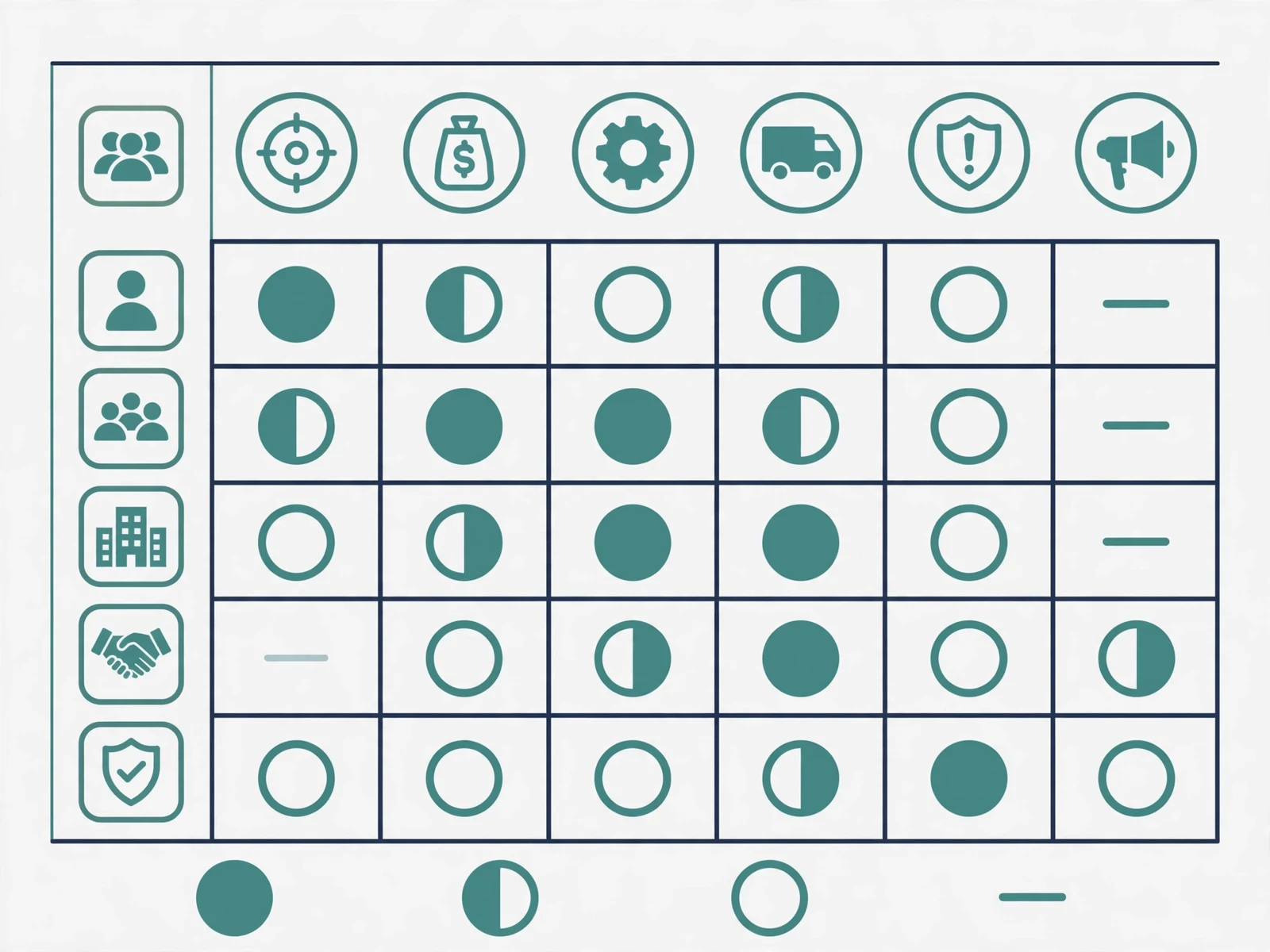
Map the Decision
Start with the actual decision or action required.
Who decides? Who advises? Who can block? Who carries execution risk? Who will be affected?
Map Stakeholder Interests
For each important stakeholder, ask:
- What are they responsible for?
- What do they fear?
- What does success look like to them?
- What pressure are they under?
- What evidence do they trust?
Do Not Treat Resistance as Irrational
Resistance often reflects a legitimate cost or risk.
A finance leader may resist because the payback is unclear. Operations may resist because the process creates work. IT may resist because the solution introduces security risk.
Influence improves when you understand the concern rather than label the person difficult.
Build Credibility Before the Ask
Influence depends partly on whether people trust your judgement.
Credibility grows through:
- reliable delivery;
- useful expertise;
- fair representation of trade-offs;
- honest communication of risk;
- follow-through.
Sequence Conversations
Do not always wait for the formal meeting.
Speak with critical stakeholders beforehand. Test concerns. Improve the proposal. Build support where appropriate.
This is not manipulation. It is preparation.
Frame the Proposal Around Shared Interests
A stakeholder is more likely to engage when the proposal connects to their outcome.
Instead of:
“Marketing needs this system.”
Try:
“The current process makes customer handover unreliable. This change gives Sales and Service the same customer information.”
Use Evidence Selectively
Different stakeholders trust different evidence.
A commercial stakeholder may care about revenue. Risk may care about control. Operations may care about capacity. Adapt the evidence without changing the facts.
Know Your Influence Sources
Influence can come from:
- expertise;
- relationships;
- access to information;
- control of resources;
- formal role;
- reputation;
- coalitions;
- timing.
Build a Coalition When the Issue Is Cross-Functional
Some proposals become stronger when several functions shape them together.
Invite genuine input early enough that people can influence the solution, not after everything has already been decided.
Know When to Escalate
Influence without authority does not mean endless persuasion.
Escalate when:
- a decision is beyond your authority;
- a material risk remains unresolved;
- stakeholders are deadlocked;
- the deadline requires executive direction.
A Stakeholder Strategy Template
- Decision required
- Decision owner
- Key supporters
- Key resistors
- Stakeholder interests
- Evidence each stakeholder needs
- Conversation sequence
- Likely objections
- Escalation point
Prioritize Stakeholders by Power and Impact
Not every stakeholder needs the same amount of attention.
A simple map can distinguish:
- high power, high impact;
- high power, lower day-to-day impact;
- lower power, high implementation impact;
- lower power, lower impact.
The point is not to ignore people with less formal power. It is to understand where decision influence and execution influence sit.
Pre-Wire the Decision
For important decisions, speak with key stakeholders before the formal meeting.
Use those conversations to:
- test assumptions;
- understand objections;
- improve the proposal;
- identify missing evidence;
- avoid surprising people who carry significant risk.
Pre-wiring is ethical when the purpose is better preparation, not secret manipulation.
Use Reciprocity Carefully
Influence often grows from a history of useful collaboration.
If you consistently help other functions solve real problems, they are more likely to engage when you need support.
Reciprocity should not become transactional scorekeeping. Think of it as professional reliability across relationships.
When Trust Is Low
If a stakeholder does not trust your function or team, a stronger argument may not be enough.
Start by reducing risk.
You might:
- run a pilot;
- share decision rights;
- agree transparent measures;
- invite independent review;
- create a reversible first step.
Common Influence Mistakes
- Entering the formal meeting without understanding objections.
- Assuming logical evidence alone will move people.
- Ignoring implementation stakeholders because they do not approve the decision.
- Escalating too early and damaging working relationships.
- Escalating too late after weeks of deadlock.
- Changing the facts for different audiences instead of changing the framing.
Use a Conversation Sequence
A stakeholder strategy can be written as a sequence.
- Speak with the technical owner to test feasibility.
- Speak with Finance to validate the commercial assumption.
- Speak with Operations to understand capacity impact.
- Revise the proposal.
- Speak with the decision owner.
- Take the aligned proposal to the formal forum.
The sequence depends on the issue. What matters is that it is deliberate.
After the Decision
Influence is not finished when the meeting ends.
Confirm decisions, acknowledge stakeholder contributions, and follow through on commitments. People remember whether collaboration was useful when the next cross-functional issue appears.
Use Different Influence Approaches for Different Stakeholders
Some stakeholders respond best to evidence. Others need early involvement. Some care about risk, others speed, customer impact, control, or cost.
Adapt the route without changing the facts.
For example:
- Finance: business case and downside.
- Operations: workload and process impact.
- Technology: feasibility, security, integration.
- Executive sponsor: strategic value and decision required.
When a Stakeholder Has More Status Than You
Prepare more, not less. Know the issue, evidence, and recommendation. Use concise language and do not weaken the point simply because the stakeholder is senior.
If you are uncertain, say what is uncertain rather than hiding behind vague language.
Measure Influence by Movement
Influence is not whether everyone likes the proposal. Ask whether the right stakeholders moved toward a useful decision, clarified a concern, provided evidence, or committed to action.
Where to Go Next
The Negotiation and Influence for Women Professionals course develops stakeholder influence, negotiation, trade-offs, and internal political judgement. The Women in Leadership program connects influence to broader organizational leadership.
Influence without authority becomes easier when you stop trying to persuade everyone the same way and start designing the stakeholder strategy around the decision.
Develop this capability in your organization