
The quality of a negotiation is often decided before the conversation begins.
Preparation gives you somewhere to stand when the other side creates pressure, urgency, or uncertainty.
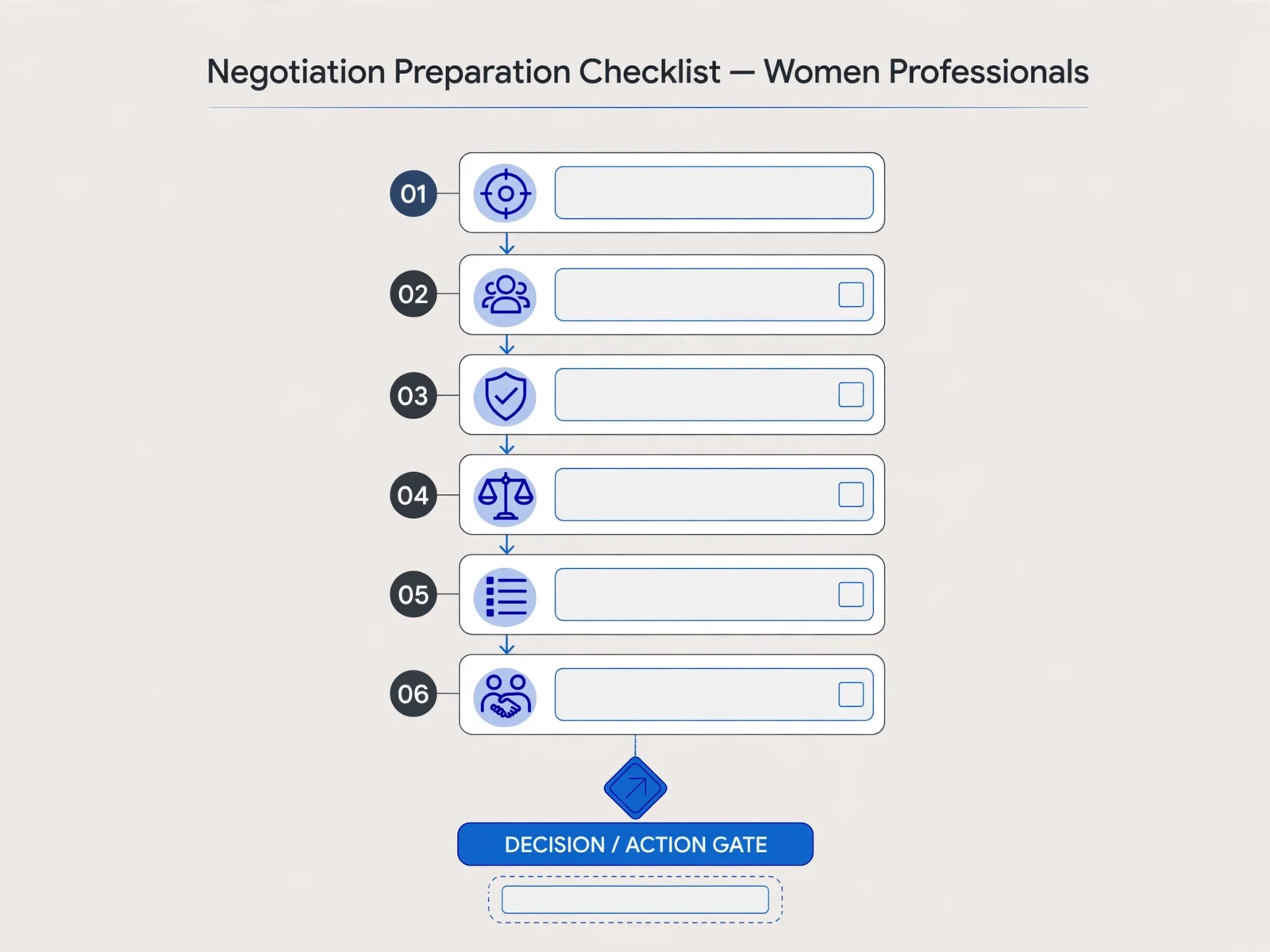
1. Define the Outcome
What are you actually trying to achieve?
Be specific about role scope, price, resources, deadline, compensation, contract terms, project priority, or another measurable outcome.
2. Identify Your Interests
Your position is what you ask for. Your interests explain why it matters.
Understanding interests creates more ways to build an agreement.
3. Define Your Alternative
What happens if no agreement is reached?
A realistic alternative protects you from accepting a poor agreement simply because the conversation feels uncomfortable.
4. Set a Target and a Boundary
Know the result you want and the point below which the agreement no longer makes sense.
5. Map Their Interests
What do they likely care about?
- cost;
- speed;
- risk;
- control;
- certainty;
- reputation;
- relationship;
- flexibility.
6. Identify Your Leverage
Leverage may come from alternatives, expertise, timing, scarce capacity, information, relationships, or the value you create.
7. Prepare Several Tradeable Variables
Do not negotiate only one issue if several variables matter.
For a role negotiation, variables might include title, salary, scope, flexibility, start date, team size, or review timing.
8. Plan Your First Ask
State it clearly enough that the other person knows what you are proposing.
9. Prepare Questions
Useful questions can reveal hidden constraints.
- What is driving that deadline?
- What would make this workable for you?
- Which part of the proposal concerns you most?
- What flexibility do you have on the other terms?
10. Plan Concessions
Know what you can move on and what you want in return.
Use conditional language:
“If we can agree the revised scope, I can move the delivery date forward.”
11. Anticipate Pressure
How will you respond to silence, urgency, a hard anchor, interruption, or “this is our final offer”?
12. Know Your Next Step
Decide who documents the agreement and what must happen after the conversation.
A One-Page Checklist
- Target outcome
- Key interests
- Alternative
- Walk-away point
- Counterpart interests
- Leverage
- Tradeable variables
- Opening proposal
- Questions
- Concession plan
- Pressure responses
- Close and follow-up
Prepare Your Evidence
Know which facts support your proposal.
For a compensation or role discussion, that might include scope, outcomes, market information, responsibilities, or comparison with the role definition. For a commercial negotiation, it may include cost drivers, service levels, volumes, or delivery constraints.
Use evidence to strengthen judgement, not to bury the conversation in data.
Know the Difference Between Need and Leverage
Needing something badly does not create leverage.
Leverage comes from the alternatives, value, timing, information, relationships, or resources each side controls.
Be realistic about what actually strengthens your position.
Plan for Silence
After making an important ask, resist the temptation to immediately lower it.
Silence may simply mean the other person is thinking.
Use Packages
When several variables matter, consider offering structured packages.
For example:
- Option A: higher price with faster delivery.
- Option B: lower price with longer lead time.
- Option C: standard price with a larger volume commitment.
Packages help reveal which variables the other side values most.
Prepare for Internal Negotiations Too
The same discipline applies to:
- headcount;
- project resources;
- role scope;
- deadline changes;
- flexibility;
- promotion responsibilities.
Internal relationships matter, but that does not mean the negotiation should be vague.
Debrief Afterward
Ask:
- What information changed the conversation?
- Where did I give value too quickly?
- What question should I have asked earlier?
- What tactic affected me?
- What will I prepare differently next time?
Negotiation capability improves through deliberate review.
Prepare Your Opening Language
Write the first two sentences you want to use.
For example:
“I want to discuss the scope of the new role before we finalize it. The responsibilities now include regional ownership and a larger team, so I would like the title, compensation, and decision authority to reflect that scope.”
Preparation helps you avoid spending the first ten minutes circling the issue.
Decide What You Will Not Negotiate
Some boundaries are genuine constraints.
Examples might include legal requirements, ethical standards, a minimum margin, safety rules, or a workload level you cannot responsibly accept.
Know these before the conversation so pressure does not redefine them in the moment.
Plan the Relationship After the Deal
A negotiation is rarely the last interaction.
Ask how the agreement will affect trust, future work, delivery expectations, and communication. Protecting the relationship does not mean accepting weak terms. It means negotiating in a way that both sides can execute afterward.
For Career Negotiations
Do not negotiate only salary if the role itself is unclear.
Clarify:
- scope;
- team;
- decision authority;
- reporting line;
- success measures;
- resources;
- title;
- flexibility;
- review timing.
For Project or Resource Negotiations
Frame the request around consequences.
Instead of “we need two more people,” explain what capacity gap exists, what outcome is at risk, and what alternatives have been considered.
Keep a Negotiation Record
After agreement, write down the key terms and responsibilities. Many poor outcomes begin not because the negotiation failed, but because the agreement was too vague to implement consistently.
Choose the Right Setting
Timing and environment matter. A rushed corridor conversation may be a poor place for a role-scope or commercial negotiation. Where possible, create enough time for both sides to consider the issues seriously.
Where to Go Next
The Negotiation and Influence for Women Professionals course turns this checklist into live preparation, negotiation practice, difficult-counterpart scenarios, and internal influence work. Commercial negotiators can also use Vendor Management and Negotiation.
Preparation does not make negotiation rigid. It gives you enough clarity to stay flexible without giving away what matters.
Develop this capability in your organization